Good to tow

Hyundai has you sorted from head to tow.

There’s nothing like packing up the car and heading for the open road, maybe it’s more about helping a friend move house or maybe its for your day to day work. Whatever the reason, we’ve put together a guide on towing to make sure you and the family get the most out of your vehicle. Everything you need to know can be found right here.

STARIA

STARIA

Gross Vehicle Mass (GVM)
8 Seat - 2,920kg - 3,040kg

Available towing
Up to 2,500kg

Payload
2WD up to 729kg
AWD up to 741kg

Total combined weight (GCM)
2,948kg - 3,068kg

2025 STARIA Load

2025 STARIA Load

Gross Vehicle Mass (GVM)
2 Seat: 3,020kg - 3,110kg

Available towing
Up to 2,500kg

Payload
2 Seat: 1,018kg - 1,089kg

Axle capacity
Front - 1,350kg
Rear - 1,450kg

Gross Combined Mass (GCM)
2 Seat: 5,520kg

Kerb weight
2 Seat - 2,920kg - 3,010kg

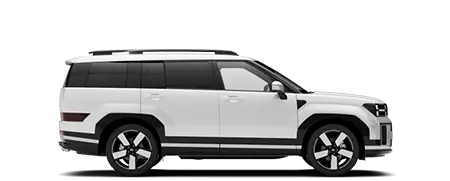
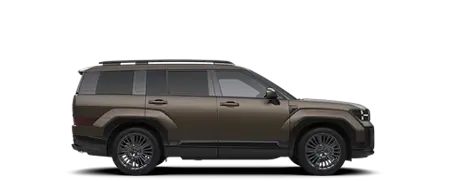
SANTA FE

SANTA FE

Gross Vehicle Mass (GVM)
7 Seat: 2,630kg - 2,680kg

Available towing
Up to 2,500kg

Payload
7 Seat: 575kg - 703kg

Axle capacity
Front: 1,380kg
Rear - 1,485kg

Gross Combined Mass (GCM)
7 Seat: 4,290kg - 4,650kg

Kerb weight
7 Seat: 2,530kg - 2,580kg

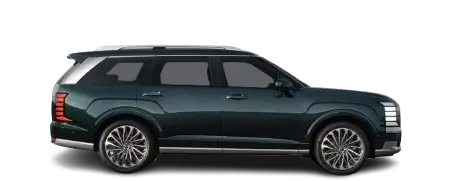
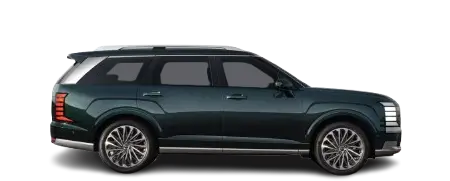
PALISADE

PALISADE

Gross Vehicle Mass (GVM)
7 Seat: 2,980kg
8 Seat: 3,000kg

Available towing
Up to 2,500kg

Payload
7 Seat: 686kg
8 Seat: 696kg

Axle capacity
Front: 1,450kg
Rear - 1,670kg

Gross Combined Mass (GCM)
7 Seat: 4,980kg
8 Seat: 5,000kg

Kerb weight
7 Seat: 2,880kg
8 Seat: 2,900kg

Definitions

Payload

The carrying capacity of the vehicle.

Axle capacity

This is the maximum load that your vehicle's front and rear axles can carry as specified by the manufacturer.

Kerb weight

Kerb weight is the weight of the vehicle without any passenger or items in it except for the standard equipment that comes with it. This is the weight of your vehicle when it's not being used and resting on a flat surface.

Get the lowdown on towing.

From “What’s my maximum towing capacity?” to “How do I safely tow something?” our quick and simple video will share everything you’ll need to know.

Frequently asked questions.

  • Q What are the maximum towing capacities of current Hyundai vehicles?

    Please check our towing page for the maximum towing capacities for our current Hyundai vehicles or your owner’s manual for your specific model


  • Q Do Hyundai vehicles come with all the equipment I need to tow?

    You will need to purchase towing equipment for your Hyundai vehicle at any Hyundai dealership. Your vehicle will then need to be fitted with the towbar, towball and trailer wiring harness kit by an authorised Hyundai service centre. When fitted by a Hyundai service centre, all Hyundai Genuine Accessories come with a 5-year warranty[A1] for quality assurance.

  • Q Is a manual or an automatic vehicle better for towing?

    Automatic vehicles will give you greater ability to manoeuvre without worrying about changing gears whilst you’re reversing into that tricky spot. But either are perfectly capable of towing your trailer, caravan and so forth.

  • Q Do I need a license to tow?

    No, you’re good to go if you have a current drivers license. If you have a Learner or Provisional plate license, you can only tow up to 250kg.

  • Q How do I know what the maximum weight of a trailer is allowed to be?

    All trailers have a ‘trailer plate’ that states the maximum loaded mass that trailer can carry. This is also known as the aggregate trailer mass (ATM).

  • Q Are some trailers easier or more stable to tow than others?

    How easy something is to tow will depend on the weight of what you are towing, how evenly you distribute this weight and that you have set up whatever you are towing correctly.

    You also need to ensure that you know the aggregate trailer mass (ATM) and that it is within the vehicle’s towing capacity.

  • Q What’s the best way to load a trailer?

    Heavy items should be placed near the centre of the trailer, not at the rear as this could cause the trailer to become unstable.

  • Q I’ve heard trailers have different kinds of brakes - what’s best?

    There are two kinds of brakes:

    1 - Over-ride braking systems.

    The over-ride braking systems are activated when the vehicle starts to slow down and the compression of the coupling by the inertia activates the trailer braking system. The over-ride braking system is generally used when the Gross Trailer Mass (GTM) is up to 2,000kg. If you are required to tow over 2,000kg, you will require braking on all wheels of the towed trailer as well as an automatic breakaway system to be applied.

    2 - Electric brake system – these are needed when towing over 2,000kg.

    If you are required to tow over 2,000kg you will need to ensure you have an electric braking system fitted. The electric braking system automatically applies the brakes on the trailer at the same time the vehicle brakes are applied. You will also have the ability to adjust and tune the braking force of the trailer using the electric brake controller, this will provide a much smoother and balanced brake.
  • Q What is Gross Combination Mass (GCM)?

    The Gross Combination Mass (GCM) is the maximum combined allowable mass for a towing road vehicle. How this is calculated is by taking into account the combined mass of the passengers and all cargo as well as the trailer and its cargo. The max GCM allowed does vary between models so you should always refer to your owner’s manual to be sure.

  • Q What is Gross Vehicle Mass (GVM)?

    The Gross Vehicle Mass (GVM) is the maximum operating weight that a vehicle is allowed to tow itself considering the mass of its components, fuel and passengers. This is specified by the vehicle manufacturer and does vary between models. So, again please ensure you check your owner’s manual to ensure you’ve got the right figure before setting out on your journey.

  • Q What is kerb weight?

    Kerb weight is the total weight of a vehicle and it does consider;

    • Standard equipment and accessory additions on or within the car,
    • Necessary operating consumables (e.g oils and coolant),
    • A full tank of fuel.
    • It does not account for the additional mass applied due to passengers or cargo.
  • Q What is the axle mass?

    The axle mass is the maximum loading permissible at each vehicle’s axle and cannot be exceeded in order for the vehicle to remain safe for the road. As this mass varies between vehicles; they are set by the manufacturer and noted within the owner’s manual for easy reference.

  • Q What is nose or ball load?

    This is the downward force that is applied to your towball when you hitch the coupling head of your item to your vehicle to be towed. For towing it needs to be within the maximum allowable down ball load found on the label of the tow bar tongue. You can review your owner’s manual for what your vehicle can cope with.

  • Q Are all towballs the same size?

    Most towballs today are 50mm in diameter however, their size will be stamped on the ball alon

  • Q Where can I go for more information?

    Your owner’s manual has a guide to towing included within it. Happy travels!

  • Disclaimers

    [H1] Hyundai Genuine Accessory required to be purchased and fitted by authorised Hyundai dealership.

    [A1] Genuine Accessories Warranty

    All Hyundai Genuine accessories are subject to 5 years warranty if purchased at the time of a new Hyundai and fitted by an authorised Hyundai Dealer. For full warranty terms and usage recommendations view the Warranty Terms and Conditions.